How Artificial Intelligence Optimization is Changing SEO: The Comprehensive Guide to Generative Search Success

Understanding how artificial intelligence optimization is changing SEO is no longer an option for digital marketers; it is a critical mandate for survival. As search engines transition from traditional keyword-matching indexes to predictive, generative answer engines, the mechanics of visibility have fundamentally shifted. Traditional search engine optimization focused heavily on backlinks, exact-match keywords, and blue links on a Search Engine Results Page (SERP). Today, Artificial Intelligence Optimization (AIO)—also referred to as Generative Engine Optimization (GEO)—redefines how search algorithms extract, synthesize, and present information to end users. For businesses operating in highly competitive international markets like the UAE, adapting to these developments ensures high-converting traffic continues reaching your digital properties rather than getting absorbed by conversational AI answers. What is Artificial Intelligence Optimization (AIO) in Search? Artificial Intelligence Optimization (AIO) is the strategic process of structuring, contextualizing, and refining online content so that Large Language Models (LLMs) and AI-driven search engines (such as Google’s AI Overviews, ChatGPT Search, Perplexity, and Bing Copilot) easily understand, synthesize, and cite it as an authoritative source. Unlike classic SEO, which prioritizes ranking individual web pages for specific keyword queries, AIO focuses on: +————————————————————————-+ | TRADITIONAL SEO vs. AIO | +————————————————————————-+ | Feature | Traditional SEO | AI Optimization (AIO) | +————————+————————+————————-+ | Primary Goal | Rank #1 on Page 1 | Featured Citation in AI | | Core Index Mechanism | Keyword Indexing | Neural Vectors & Graphs | | Optimization Focus | Backlinks & Keywords | Entities & Context | | Content Structure | Long-form Keywords | Direct Q&A + Micro-data | +————————————————————————-+ 5 Core Ways Artificial Intelligence Optimization is Transforming SEO The shift from standard algorithmic search to AI-synthesized responses has modified search engine behavior across five primary areas: 1. The Transition from Keyword Matching to Vector Search & Semantic Intent Traditional search relied heavily on TF-IDF (Term Frequency-Inverse Document Frequency) and exact-match strings. Modern AI engines utilize vector embeddings—mathematical representations of words, phrases, and concepts in high-dimensional space. Search engines no longer look merely for the phrase “best CRM software.” They evaluate the mathematical relationship between software features, implementation timelines, local business needs in regions like Dubai or Abu Dhabi, and industry verticals. Content must satisfy the broader semantic context of a topic rather than focusing on repetitive keyword densities. 2. The Rise of Generative Answer Engines & AI Overviews With the deployment of AI Overviews globally and across the Middle East, a single search query can generate a direct, synthesized summary at the top of the SERP. This leads to a rise in “zero-click searches,” where users gain immediate answers without opening an external site. To maintain high visibility, brands must optimize content so that AI engines select their domain as an underlying citation. This requires clear content formatting, verified data points, and schema markup that machine models can evaluate quickly. 3. Hyper-Personalization and Conversational Queries Search queries are becoming longer and more conversational. Instead of searching “dubai corporate tax rates,” users ask: “What are the corporate tax compliance steps for a mid-sized tech company operating out of Dubai Internet City?” AI optimization ensures content answers these hyper-specific, multi-layered queries. Structuring content logically with subheadings, bullet points, and authoritative context helps generative engines extract your exact paragraphs for targeted user prompts. 4. Technical Infrastructure: Schema, APIs, and Machine-Readability Machine-readability is central to AIO. While human-friendly formatting remains crucial for user experience, underlying structural markers allow AI algorithms to parse your site’s content effortlessly. 5. Evolution of E-E-A-T (Experience, Expertise, Authoritativeness, Trustworthiness) As AI models produce vast amounts of generic content, search engines place higher value on verified human experience and technical authority. Unique data, primary research, original case studies, and clear authorship signals prevent content from being categorized as low-value AI text. Benchmark Data: The Impact of AI Optimization on Search Metrics The following metrics illustrate how AI integrations are reshaping search engine performance benchmarks: +—————————————————————————-+ | SEO BENCHMARK COMPARISON MATRIX | +—————————————————————————-+ | Metric Focus | Standard Web Search | AI-Optimized Result | +——————————+———————+———————–+ | Average CTR on Top Result | ~27.6% | ~12.3% (Synthesized) | | Citation CTR (AI Overview) | N/A | ~34.8% (Targeted) | | Average Query Length | 2.4 words | 6.8 words | | Conversion Rate from AI Ref. | Base Level (1.0x) | 2.4x Higher Quality | +—————————————————————————-+ Key takeaways from current performance data include: Actionable Framework: How to Optimize Your Content for AI Optimization To systematically adjust your digital marketing strategy for AI-driven engines, execute the following four-stage framework: +————————————————————-+ | AIO IMPLEMENTATION STACK | +————————————————————-+ | STAGE 1: Entity Mapping & Graph Alignment | | –> Map brand core entities with Knowledge Graphs | +————————————————————-+ | STAGE 2: Direct-Answer Content Structuring | | –> Implement Q&A blocks and data tables | +————————————————————-+ | STAGE 3: Technical Semantic Markup | | –> Deploy JSON-LD microdata & clean HTML schema | +————————————————————-+ | STAGE 4: Authority & Information Gain
The Future of SEO Marketing in the Middle East
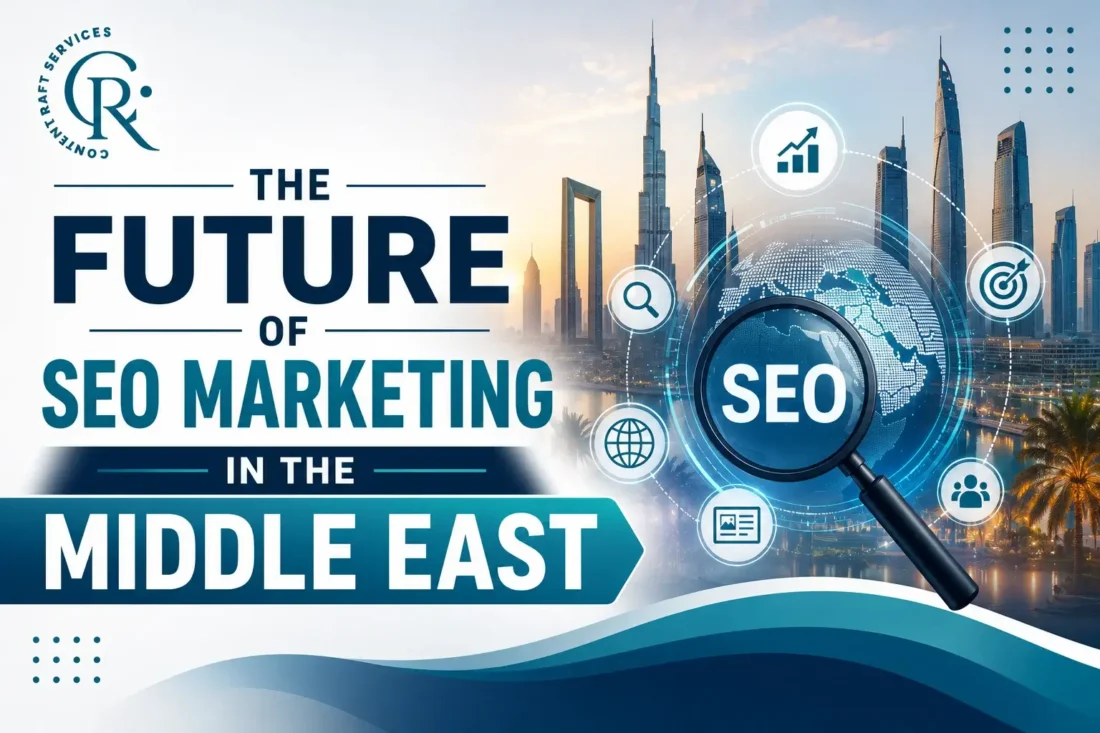
Search in the Gulf is changing shape. Google now answers questions directly on the results page. Voice assistants understand Gulf Arabic dialects better than they did two years ago. Shoppers in Dubai and Riyadh discover brands on Instagram before they open a search bar at all. If your SEO strategy still looks like it did in 2022, you are already behind. This guide breaks down the future of SEO marketing in the Middle East in plain terms. No vague predictions, no filler. Just the shifts that will decide who ranks in Saudi Arabia, the UAE, Qatar, Oman, Kuwait, and Bahrain over the next few years, and what you can do about each one starting today. Why the Old SEO Playbook Is Losing Power in the Gulf For years, Middle East SEO meant a simple formula. Pick Arabic and English keywords. Build some backlinks. Publish a few blog posts. Wait. That formula still works, but it works less every quarter. Three things broke it. First, Google stopped sending every click to a website. AI Overviews and featured answers now sit above the organic results, and they often satisfy the searcher’s question without a single click. Second, GCC audiences moved fast. Smart speaker use, video-first discovery, and social commerce all grew in the region at rates that outpaced Europe and North America. Third, generic content stopped working, because search engines got better at spotting thin, translated, or AI-generated filler, and Gulf audiences got better at ignoring it. As a result, brands that treat SEO as a checklist will lose visibility. Brands that treat it as an ongoing conversation with the customer will not. That difference is the whole story of where this market is headed. AI Search Is Rewriting the Future of SEO Marketing in the Middle East The biggest shift here is the rise of AI-powered search. Google’s AI Overviews already appear for informational queries in Saudi Arabia and the UAE, in both Arabic and English. These summaries pull from pages that answer a question clearly. They favor pages that cite real data and structure information so a machine can read it fast. Because of this, “ranking well” now means something different. A page can sit outside the top three organic results and still win the AI summary, simply by answering the question better. In practice, that means you should: Even so, brands that keep publishing long, unfocused articles without a clear answer near the top will stay invisible in these AI summaries. Strong domain authority will not save them. Voice Search Is Catching Up With How Gulf Audiences Actually Talk Smart speakers and voice assistants have grown fast in Saudi Arabia and the UAE. Arabic voice recognition has improved enough to make this a real channel, not a novelty. However, people speak differently than they type. For example, a Riyadh resident might type “أفضل مطاعم الرياض” into Google. Out loud, they might instead ask their phone “وين أطيب مطعم قريب مني؟” (where’s the best restaurant near me?). Both carry the same intent, in completely different phrasing. Optimize only for the typed version, and you miss a whole slice of demand. To prepare for this shift, leading brands are doing three things: building FAQ pages around natural, spoken phrasing, adding speakable schema where it fits, and keeping Google Business Profiles current with the details a voice assistant would read aloud, such as hours, location, and services. Page Speed and Arabic Typography Will Decide Who Even Gets Indexed Well Technical SEO in the Gulf has a problem most Western guides never mention. Arabic web fonts are heavy, and many enterprise sites in the region still serve a desktop-first experience to mobile users on 4G connections in Egypt, Jordan, and parts of Saudi Arabia. Since Google indexes on mobile first everywhere, this matters more than it seems. A right-to-left layout that loads slowly drags down Core Web Vitals scores, and so does an Arabic font file that blocks rendering. In short, this is not a cosmetic issue. It is a foundation issue. Consequently, the brands pulling ahead are subsetting their Arabic fonts and inlining critical CSS for RTL layouts. They also test load times on real mid-range Android phones on Gulf mobile networks, not on office Wi-Fi with a fast laptop. Hyper-Local Search Will Replace Country-Level Thinking Treating “Saudi Arabia” or “the UAE” as a single search market is already outdated, and it will only get less accurate. Google increasingly serves different results for Riyadh than for Jeddah, and different results for Dubai than for Abu Dhabi, even for identical queries. Naturally, this matters for any business operating across the six GCC markets: UAE, Saudi Arabia, Qatar, Oman, Kuwait, and Bahrain. A single national landing page, written once and reused everywhere, misses the city-level nuance that Google and customers now expect. For that reason, winning local visibility through 2030 will depend on: E-Commerce Discovery Is Splitting Between Search and Social Arabic e-commerce keeps growing, but discovery is no longer one funnel. Instagram and WhatsApp now drive a real share of product discovery across the GCC, while search stays the channel people use once they are ready to compare and buy. On top of that, marketplaces like Noon and Amazon.sa add another layer, since visibility inside a marketplace depends on a different algorithm than visibility on the open web. The practical result: an e-commerce brand in this market needs Arabic product schema and review markup. It also needs a strategy that connects social discovery to search-driven conversion, instead of treating each channel as its own silo. Trust Signals Will Matter More Than Rankings Alone Here is the part most predictions skip. As AI-generated content floods the internet, Google leans harder on trust signals to decide what deserves visibility, and Arabic-speaking audiences are unusually sensitive to credibility, too. A byline from a real expert now carries more weight than another 2,000-word article stuffed with keywords, and so does a citation from a recognized regional institution or a case study with actual numbers. Overall, this
Why Saudi Arabia Businesses Need SEO: Vision 2030 Strategy Guide
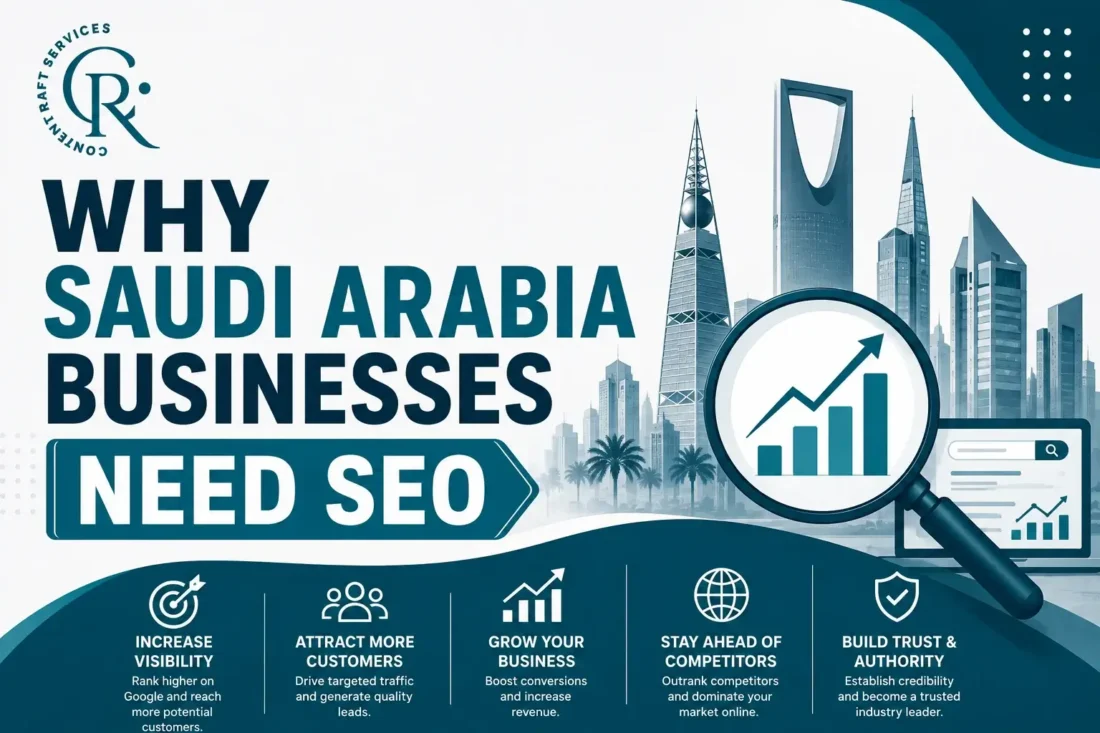
Saudi Arabia businesses need SEO to capture high-intent digital demand driven by Saudi Vision 2030, an internet penetration rate exceeding 98.6%, and a rapidly expanding e-commerce sector projected to cross $31.29 billion. Search Engine Optimization (SEO) allows companies in Riyadh, Jeddah, Dammam, and across the Kingdom to secure high non-paid Google rankings, outpace local competitors, reduce dependence on rising pay-per-click (PPC) ad costs, and establish domain trust among Arabic- and English-speaking consumers. Why Saudi Arabia Businesses Need SEO: The Strategic Playbook for Market Dominance The economic landscape across the Kingdom of Saudi Arabia is undergoing a fast-paced digital evolution. Driven by the ambitious goals of Saudi Vision 2030, traditional commerce is shifting toward online platforms, digital services, and mobile-first consumer interactions. Understanding why Saudi Arabia businesses need SEO is no longer just a technical consideration for IT departments; it is a core business growth driver. With internet penetration reaching 98.6% and 5G coverage expanding to over 78% nationwide, modern Saudi consumers turn to search engines like Google before making B2C or B2B purchasing decisions. Companies that prioritize Search Engine Optimization (SEO) build brand trust, capture organic traffic, and secure market share in competitive sectors ranging from real estate and healthcare to retail and enterprise B2B. The Saudi Digital Landscape: Market Data & Key Growth Indicators To understand the necessity of search optimization in the Kingdom, it helps to examine the macroeconomic factors driving online consumer behavior in KSA. SAUDI ARABIA DIGITAL MARKET AT A GLANCE (2025–2026) ┌─────────────────────────────────────────┬───────────────────────────┐ │ Metric / Economic Indicator │ Statistic │ ├─────────────────────────────────────────┼───────────────────────────┤ │ Internet Penetration Rate │ 98.6% │ │ 5G Population Coverage │ 78.0% │ │ Smartphone Retail Revenue Share │ 77.9% │ │ E-Commerce Market Size (Projected 2026) │ $31.29 Billion │ │ Mada Debit/Digital Wallet Ecommerce Share│ ~57.3% │ │ Digital Economy GDP Contribution Target │ 25.0% by 2030 │ └─────────────────────────────────────────┴───────────────────────────┘ The figures above highlight a crucial shift: Saudi Arabia’s consumer base is fully online, highly mobile, and digitally enabled. Brands that do not appear on the first page of Google search results yield potential revenue directly to early-adopting competitors. 5 Critical Reasons Why Saudi Arabia Businesses Need SEO ┌──────────────────────────────────────────┐ │ 1. Aligning with Vision 2030 Growth │ └────────────────────┬─────────────────────┘ │ ┌────────────────────▼─────────────────────┐ │ 2. Capturing High-Intent Local Searches │ └────────────────────┬─────────────────────┘ │ ┌────────────────────▼─────────────────────┐ │ 3. Lowering Customer Acquisition Cost │ └────────────────────┬─────────────────────┘ │ ┌────────────────────▼─────────────────────┐ │ 4. Dominating Dual-Language Search │ └────────────────────┬─────────────────────┘ │ ┌────────────────────▼─────────────────────┐ │ 5. Building Brand Authority & Trust │ └──────────────────────────────────────────┘ 1. Capitalizing on Vision 2030 & Digital Economy Expansion Under Saudi Vision 2030, the Kingdom is diversifying its economy away from oil dependency, investing heavily in technology, tourism, fintech, and logistics. As government programs like Monsha’at onboard tens of thousands of SMEs into the digital economy, search volumes for corporate services, commercial products, and local solutions are at an all-time high. SEO provides the structural visibility required to capture market share created by mega-projects like NEOM, Qiddiya, and Red Sea Global. 2. Capturing High-Intent Organic Search Traffic Saudi shoppers and B2B buyers use Google as their primary research engine. Search queries in the region often carry commercial or transactional intent, such as: Appearing in top organic spots for high-intent search terms captures users actively seeking services, leading to higher conversion rates compared to cold audience outreach. 3. Reducing Reliance on Paid Advertising (PPC) While Google Ads and paid social campaigns offer instant visibility, advertising costs per click (CPC) in competitive Saudi verticals have grown significantly. Paid ads stop delivering traffic the moment your budget runs out. Investing in organic search build assets that deliver continuous, compounding traffic over time. By pairing paid media with a solid search strategy, businesses stabilize their Customer Acquisition Cost (CAC) and maximize overall ROI. 4. Dominating the Dual-Language Market (Arabic & English) Saudi Arabia features a unique, multi-lingual search demographic: A comprehensive search strategy targets both linguistic channels, securing visibility across all regional audience segments. 5. Establishing Local Authority & E-E-A-T Google evaluates content based on Experience, Expertise, Authoritativeness, and Trustworthiness (E-E-A-T). For businesses operating in KSA, local SEO signals—such as verified Google Business Profiles, localized Arabic content, NAP (Name, Address, Phone) consistency, and backlinks from local .sa domains—signal to Google that your brand is a legitimate, trusted operator in the Kingdom. Arabic SEO vs. English SEO: Unlocking KSA’s Dual Search Intent Winning rankings in Saudi Arabia requires a localized content approach rather than automated, direct translations. ┌──────────────────────────────┬──────────────────────────────┐ │ Arabic SEO Considerations │ English SEO Considerations │ ├──────────────────────────────┼──────────────────────────────┤ │ Focus on local dialects │ Focus on corporate/B2B terms │ │ Right-to-Left (RTL) UX design│ Expat & cross-border intent │ │ Voice search optimization │ Technical documentation │ │ Local entity alignment │ Global brand integration │ └──────────────────────────────┴──────────────────────────────┘ Navigating Arabic Keyword Nuances Arabic searchers often utilize conversational long-tail queries and regional terminology. Effective Arabic SEO involves: Capturing Expat and B2B Audiences with English SEO English-language searches in Saudi Arabia account for significant volume in corporate services, luxury retail, specialized healthcare, and higher education. A balanced SEO architecture provides dual-language site structures (using hreflang tags) to deliver the correct language version based on user location and device settings. Local SEO & Geo-Targeting: Winning in Riyadh, Jeddah, & Dammam Saudi Arabia is geographically expansive, with distinct commercial centers driving economic activity: ┌─────────────────────────────────┐ │ SAUDI ARABIA REGIONAL │ │ COMMERCIAL HUBS │ └────────────────┬────────────────┘ │
How to Improve Lead Generation in Kuwait: A Practical Guide for Local Businesses
To improve lead generation in Kuwait, businesses should combine social media marketing (especially Instagram and Snapchat), localised Arabic content, WhatsApp-based outreach, and targeted Google Ads. Focus on mobile-first experiences, build trust through reviews and testimonials, and leverage Kuwait’s high social media engagement rates to attract and convert quality leads consistently. There’s a common frustration among business owners in Kuwait — they’re spending money on marketing, getting some traffic, but the leads just aren’t coming in the way they should. Sound familiar? Learning how to improve lead generation in Kuwait isn’t just about running more ads or posting more often. It’s about understanding the Kuwaiti consumer, speaking their language (sometimes literally), and showing up where they actually are. This guide breaks it all down for you — practically, without the fluff. Why Lead Generation in Kuwait Is Different From Other Markets Kuwait has one of the highest social media penetration rates in the world. More than 99% of the population uses the internet, and smartphone usage is practically universal. That’s a marketer’s dream — but it also means competition is fierce, and attention is hard to earn. Kuwaiti consumers tend to be brand-aware, quality-conscious, and highly influenced by word of mouth. Trust matters enormously here. People don’t just buy from businesses; they buy from brands they’ve heard about from friends, seen shared by influencers, or discovered through a recommendation on a WhatsApp group. Understanding this cultural context is the starting point for everything else. The Biggest Reasons Businesses Struggle to Generate Leads in Kuwait Before jumping into solutions, it helps to understand why many local businesses are stuck. Most of the time, it comes down to a few key issues. 1. They’re Targeting the Wrong Audience Running ads to a broad, general audience in Kuwait rarely works. The country is relatively small geographically, but the population is incredibly diverse — Kuwaiti nationals, Arab expats, South Asian expats, and Western professionals all have very different buying behaviours and communication preferences. 2. Their Message Isn’t Localised A generic English-language ad that wasn’t designed for the Kuwaiti market will almost always underperform compared to content that feels local, relevant, and culturally aware. 3. They’re Ignoring Mobile UX In Kuwait, most people browse, shop, and research on their phones. If your website or landing page loads slowly, looks broken on mobile, or has a clunky checkout — you’re losing leads before they even have a chance to convert. 4. There’s No Follow-Up System Getting a lead is only half the battle. Many businesses here capture an enquiry through Instagram DMs or a contact form and then take days to respond. By then, the prospect has already moved on to a competitor. How to Improve Lead Generation in Kuwait: Strategies That Actually Work Build a Strong Social Media Presence (The Right Way) Instagram and Snapchat dominate in Kuwait — especially among younger, higher-spending demographics. TikTok is also growing fast. Facebook is still relevant for certain age groups, but it’s not where you want to focus most of your energy if you’re targeting 18–45 year olds. The key isn’t just posting regularly. It’s posting content that resonates. Behind-the-scenes videos, customer success stories, product demonstrations in Arabic, and interactive Stories with polls or questions tend to generate far more engagement — and far more leads — than polished but generic promotional posts. Use Instagram’s lead generation forms and link-in-bio tools to make it as easy as possible for people to take action. Every extra click you add to the process costs you potential leads. Use WhatsApp Business as a Lead Capture Channel This is one of the most underutilised lead generation tools in the Kuwaiti market. WhatsApp isn’t just a messaging app here — it’s how people do business. Family groups share recommendations, businesses send catalogues, and customers expect fast, personal responses. Set up WhatsApp Business with a clear product catalogue, an automated greeting message, and quick-reply templates. Add your WhatsApp number to every touchpoint — your Instagram bio, your website, your Google Business profile, your email signature. When someone reaches out on WhatsApp, they’re already halfway to becoming a customer. Don’t waste that moment. Invest in Localised Google Ads and SEO People in Kuwait search in both Arabic and English, often for the same thing. If you’re only targeting English keywords in your Google Ads campaigns, you’re missing a significant chunk of search volume. Work with a local SEO specialist or translation expert to build Arabic keyword lists that reflect how Kuwaitis actually search — not just direct translations. Search behaviour in Arabic often differs from English, so you need someone who understands the nuances. For organic search (SEO), focus on creating content that answers real questions your potential customers are asking. Leverage Local Influencers Strategically Influencer marketing in Kuwait is mature, well-established, and still very effective when done right. The operative phrase is “done right.” Mega-influencers with hundreds of thousands of followers can give you reach, but micro-influencers (10,000 to 80,000 followers) often deliver far better lead quality because their audiences are more engaged and trust them more personally. When selecting influencers, look beyond follower count. Ask for engagement rate data, check their comment quality (real conversations vs. generic emoji), and make sure their audience profile matches your target customer. Optimise Your Landing Pages for Conversions Getting traffic is one thing. Turning that traffic into a lead is another. Your landing page needs to do heavy lifting — and most businesses in Kuwait have landing pages that don’t work hard enough. A high-converting landing page should have: If you’re running paid ads, each ad should lead to a dedicated landing page, not your homepage. This alone can dramatically improve your lead conversion rate. Run Retargeting Campaigns Not everyone converts the first time they encounter your brand. In fact, most don’t. Retargeting lets you re-engage people who’ve already visited your website, watched your videos, or interacted with your social profiles. This is where a lot of the “easy” leads come from. Someone visited your website but
Real Estate SEO in Abu Dhabi- Strategies for Agents & Developers
If you’re a real estate agent or developer in Abu Dhabi, you already know the market is fiercely competitive. Hundreds of listings go live every week, buyers and investors are searching online before they ever pick up the phone, and if your website isn’t showing up on Google — someone else’s is. The good news? Most real estate websites in Abu Dhabi are still making basic SEO mistakes that are surprisingly easy to fix. That means there’s a genuine opening right now for agents and developers who are willing to do the work. This isn’t a generic “write good content” guide. This is a practical, Abu Dhabi-specific SEO breakdown that covers what actually moves the needle in this market. Why SEO Matters More Than Ever for Abu Dhabi Real Estate Let’s be honest — most people in the industry still rely on portals like Bayut and Property Finder to drive leads. And those portals work. But here’s the problem: you’re competing with hundreds of other listings on those platforms, paying for visibility, and building someone else’s brand equity, not your own. When someone types “buy apartment in Al Reem Island” or “off-plan villa Abu Dhabi” into Google and lands on your website — that’s a lead that costs you nothing recurring. That’s organic traffic compounding over time. And unlike paid ads, it doesn’t stop the moment your budget runs out. Real estate buyers in the UAE are highly research-driven. A Bayut report noted that UAE property searches have consistently grown year-on-year, with a large share happening on mobile and via Google search before users ever visit a portal. That first touchpoint matters enormously. Understanding How Abu Dhabi Property Buyers Actually Search Before you can rank for anything, you need to think like your buyer. Here’s the reality: buyers don’t search the way agents talk. Nobody is Googling “Grade A residential units in prime areas.” They’re searching things like: These are called long-tail keywords — and they’re gold for real estate SEO because they show clear intent. Someone searching “freehold properties Abu Dhabi for expats” isn’t browsing. They’re actively looking to buy. Tools like Google Keyword Planner, Ahrefs, or even Google’s autocomplete can help you find what your audience is genuinely searching for. On-Page SEO: Getting Your Property Pages Right This is where most real estate websites fall flat. They have beautiful designs and awful structure. Here’s what you need to nail on every key page. Title Tags and Meta Descriptions Your title tag is one of the most direct ranking signals Google reads. A title like “Properties — XYZ Real Estate” is a wasted opportunity. Instead, try: “2-Bedroom Apartments for Sale in Al Reem Island, Abu Dhabi | XYZ Real Estate.” Your meta description won’t directly affect your ranking, but it affects your click-through rate — which does. Write it like a mini ad. Mention something specific: price range, payment plan, proximity to a landmark. URL Structure Keep URLs clean and descriptive. /listings/2-bedroom-apartment-al-reem-island-abu-dhabi beats /listings/prop-id-48392 every single time. Google can read words. It can’t read random IDs. Headers (H1, H2, H3) Every page should have one H1 that clearly states what the page is about and includes your primary keyword. Your H2s and H3s should break down subtopics naturally — think of them as chapter titles in a book. Don’t stuff keywords in every header. Write them the way you’d say them out loud. Property Descriptions That Go Beyond the Basics Most property listings are copied directly from the developer’s brochure — which means Google sees the exact same content on 40 other websites. That’s a duplicate content problem. Write original descriptions. Talk about the view from the balcony. Mention the commute to ADGM or the time it takes to reach Yas Mall. Add practical information that a buyer actually cares about. Longer, unique descriptions get indexed better and build trust with readers. Local SEO: Dominating Abu Dhabi-Specific Searches Local SEO is where real estate agents can genuinely outcompete larger portals — because the portals don’t own neighbourhoods. You can. Google Business Profile If you don’t have a verified Google Business Profile for your agency, this is the single highest-ROI thing you can do today. It’s free, it shows up prominently in local search results, and it lets clients leave reviews that build social proof. Fill out every field. Upload real photos of your team, your office, and even properties you’ve sold. Post updates regularly — new listings, market insights, area guides. Google rewards active profiles. Create Neighbourhood Content Pages This is one of the most powerful (and underused) SEO strategies in Abu Dhabi real estate. Create dedicated pages for every area you operate in: These pages target location + intent searches that buyers actually use. They also position you as the area expert — not just another agent with a listings grid. NAP Consistency NAP stands for Name, Address, Phone Number. Make sure these details are identical across your website, Google Business Profile, Property Finder, Bayut, and any directories you’re listed in. Inconsistent information confuses both Google and potential clients. Technical SEO: The Foundation You Can’t Ignore Content and keywords matter — but if your site has technical problems, even great content won’t rank well. Here are the essentials for real estate websites specifically. Page Speed Real estate websites tend to be image-heavy, and large image files kill load times. Compress every photo before uploading. Use next-gen formats like WebP. Aim for a Google PageSpeed Insights score above 70 on mobile. A slow site doesn’t just frustrate users — it signals poor quality to Google. Mobile Optimisation The majority of property searches in the UAE happen on mobile. Your listings grid, map integrations, enquiry forms, and WhatsApp CTAs need to work seamlessly on a phone screen. Test your site on multiple devices, not just your laptop. Schema Markup for Real Estate Schema markup is code that tells Google exactly what your content means. For real estate, you can use RealEstateListing schema to help Google understand your property details
Link Building Strategies – That Work in the UAE Market
If you’ve been running SEO campaigns in the UAE and wondering why your link building efforts aren’t moving the needle — you’re not alone. The UAE market is unlike any other. You’re dealing with a highly diverse, multilingual population, a digital landscape dominated by mobile users, and a business culture built almost entirely on trust and relationships. The generic link building playbook that works in the US or UK? It only gets you so far here. I’ve spent years watching businesses pour money into link building strategies that were technically correct but culturally wrong for this region. In this guide, I’m breaking down what actually works — tactics grounded in how the UAE market really operates, not just how SEO theory says it should. Why Link Building in the UAE Is Different (And Harder) Before we get into tactics, let’s acknowledge something most SEO guides skip over: the UAE has one of the most competitive and nuanced digital environments in the Middle East. You’re targeting audiences in Arabic, English, Hindi, Tagalog, and more — often on the same website. Government and telecom infrastructure plays a real role in what content is accessible. And the business culture here places enormous weight on credibility and authority before anyone hands you a backlink. Local publishers, news outlets, and industry portals don’t just hand out links. They want to know who you are, what your reputation looks like, and whether associating with you reflects well on them. That’s actually great news if you’re willing to build things the right way. 1. Build Relationships with UAE-Based Publishers First This might sound obvious, but it’s the step most international companies completely skip. If you want links from Gulf News, Khaleej Times, Arabian Business, Zawya, or any of the major industry blogs in sectors like real estate, logistics, or fintech — you need to be known before you pitch. Start by: Key Principle:The relationship always comes before the link. This is non-negotiable in the UAE. 2. Target UAE-Specific Directories and Business Listings Not all directory links are created equal, and in the UAE, there are several that carry genuine SEO value — both for traditional search rankings and for building your local authority signals. High-value local directories worth targeting: The government-backed listings deserve special attention. A link from a .gov.ae or .ae government domain is rare and valuable — and it’s more accessible than you’d think if you’re a registered UAE business. 3. Create Content That UAE Media Actually Wants to Cite Here’s the honest truth about most ‘content marketing’ in the region: it’s too generic. Everyone is publishing ‘Top 10 SEO Tips’ or ‘Why Digital Marketing Matters.’ Nobody is citing that. What UAE media outlets do cite and link to is original, locally relevant data and insight. Think: If you can publish something that a journalist writing about the UAE market needs to reference to make their article credible — you will get cited. That’s the formula. Pro Tip:Survey 100–200 UAE-based professionals in your industry, publish the findings, and pitch the story to local media. A simple survey can become a press piece that earns 15–20 editorial backlinks. 4. Use Arabic-Language Content to Access an Untapped Link Pool Most non-Arabic companies operating in the UAE focus almost exclusively on English content. That means there’s a massive gap in quality Arabic-language content across almost every industry. Arabic pages from authoritative .ae sites, Arabic news portals, and Arabic-language blogs represent an enormous and largely uncontested backlink opportunity. Investing in high-quality Arabic content — not machine-translated, but properly written by native speakers — opens doors to: Even a handful of strong Arabic backlinks from genuinely authoritative sources can shift your visibility significantly, especially for searches in Arabic. 5. Leverage the UAE’s Thriving Startup and Tech Ecosystem Dubai and Abu Dhabi have become genuine startup hubs, and that ecosystem has created a rich network of media, investors, accelerators, and tech communities actively looking for content to share and reference. Some underutilised link opportunities here: 6. Build Local .Edu and Community Links .edu.ae and .ac.ae links are rare and powerful. UAE universities — University of Dubai, American University in Dubai, UAEU, Khalifa University — sometimes link to industry resources, research contributions, or business sponsors. Ways to get into this conversation: These links take effort to earn, but they’re extremely valuable and virtually impossible to replicate with mass outreach tactics. 7. Digital PR Done Right for the UAE Digital PR is probably the highest-leverage link building approach available in the UAE — when it’s done with genuine local knowledge. Here’s how it differs from generic PR: A well-timed, well-framed press pitch that ties your story into something the UAE press already wants to write about can earn you links from 10–20 publications in a single campaign. 8. Competitor Link Analysis — With a UAE Lens Standard competitor backlink analysis applies here, but run it with regional filters. When you pull backlink profiles for your top UAE-ranking competitors using tools like Ahrefs or Semrush: Competitors who’ve been in the UAE market longer have often done the legwork of finding these placements — you can benefit from that research. What to Avoid in the UAE Market A Realistic Timeline Link building in the UAE doesn’t produce overnight results — and anyone who tells you it will is either selling you something or hasn’t actually done it here. Period Focus Months 1–2 Foundational work — directories, citations, brand mentions, profile building Months 3–4 Content-led outreach and early media placements Months 5–6 First editorial links from quality UAE publications; early ranking movement on mid-tail terms Months 6–12 Compounding results, stronger domain authority in .ae signals, ranking for competitive keywords It’s a long game. But if you’re building genuine relationships and creating content that serves the UAE market specifically, the links you earn are also considerably more durable than what most automated tactics produce. Final Thoughts The UAE is a market that rewards patience, cultural awareness, and genuine quality. The shortcuts that work in less competitive
Multilingual SEO: How to Rank in Both Arabic and English in UAE
If you’ve ever searched for something in Arabic on Google UAE and noticed the results feel completely different from the English ones — you’re not imagining it. They are different. And if your business is only optimizing for one language, you’re handing half your potential customers to a competitor who figured this out before you did. The UAE is one of the few markets in the world where two languages don’t just coexist — they compete, overlap, and sometimes behave in completely unpredictable ways from an SEO standpoint. Arabic is the official language. English is the language of business, expat life, and a huge chunk of online search. Ignoring either one is a strategic mistake. This guide breaks down exactly how multilingual SEO works in the UAE, what most brands get wrong, and how to build a setup that ranks in both languages without confusing Google or your users. Why the UAE Is Unlike Any Other Multilingual Market Most countries that deal with multilingual SEO have a dominant language and a secondary one. France has French. Germany has German. The UK has English. The UAE doesn’t work that way. According to the UAE’s 2023 population data, roughly 88% of the country’s residents are expatriates. That means your audience could be a Filipina nurse searching in English, an Egyptian entrepreneur searching in Arabic, or a Pakistani engineer switching between both depending on the device or context. This isn’t a bilingual country in the traditional sense — it’s a genuinely multilingual society where search behavior doesn’t follow clean rules. Add to this the fact that Google.ae serves results that are highly sensitive to location signals, and you have a market where technical SEO mistakes get punished fast and good setup gets rewarded just as quickly. The Biggest Mistake: Treating Arabic as a Translation, Not a Language This is where most businesses fall flat. They build a solid English website, then ask someone to translate it into Arabic and slap it under /ar/. Done, right? No. Not even close. Arabic SEO is not about translation. It’s about how Arabic speakers actually search. And the gap between translated content and native Arabic content is enormous — not just linguistically, but in terms of search intent, keyword structure, and even reading behavior. Key Arabic SEO Considerations URL Structure: Get This Right Before Everything Else Your URL structure is the foundation of multilingual SEO. Get it wrong and no amount of content optimization will save you. There are three main options: Option 1: Subdirectories (Recommended) yoursite.com/en/ → Englishyoursite.com/ar/ → Arabic This is the structure Google recommends most often. It consolidates your domain authority into one domain, it’s easy to manage, and it sends clear signals about language targeting. Option 2: Subdomains en.yoursite.com → Englishar.yoursite.com → Arabic This works, but Google treats subdomains as separate entities, which means your domain authority doesn’t consolidate as cleanly. Some large international brands use this, but for most UAE businesses, subdirectories are a better choice. Option 3: Separate Domains (Avoid for Most Businesses) This is the hardest to manage from an SEO standpoint, especially if you’re building authority from scratch. You’re essentially doing double the work with no clear advantage. Hreflang Tags: The Most Misunderstood Part of Multilingual SEO Hreflang is the HTML attribute that tells Google which version of your page to serve to which audience. If you have an English page and an Arabic page covering the same topic, hreflang connects them so Google doesn’t penalize you for duplicate content. Hreflang Implementation Example <!– On your English page (/en/services/) –><link rel=”alternate” hreflang=”en” href=”https://yoursite.com/en/services/” /><link rel=”alternate” hreflang=”ar” href=”https://yoursite.com/ar/services/” /><link rel=”alternate” hreflang=”x-default” href=”https://yoursite.com/en/services/” /> <!– On your Arabic page (/ar/services/) –><link rel=”alternate” hreflang=”ar” href=”https://yoursite.com/ar/services/” /><link rel=”alternate” hreflang=”en” href=”https://yoursite.com/en/services/” /><link rel=”alternate” hreflang=”x-default” href=”https://yoursite.com/en/services/” /> Critical Hreflang Rules Content Strategy: What to Write and in Which Language Here’s a question most businesses don’t ask: should every page exist in both languages? Not necessarily. The smarter approach is to think about search intent by language. Topics That Skew Arabic Search Topics That Skew English Search Genuinely Bilingual Topics (Build Both) For bilingual topics, don’t create mirror translations. Write Arabic content for an Arabic-speaking audience — different examples, different cultural references, potentially different keyword angles on the same service. On-Page SEO for Arabic Pages Beyond hreflang, several on-page elements need special attention for Arabic pages: Google Search Console & Analytics Setup When you’ve implemented your multilingual structure, verify both language versions in Google Search Console. Add your root domain as a property — this covers all subfolders. Set the International Targeting report to “Not set” — your hreflang tags already handle language and regional targeting. Check the International Targeting report regularly for hreflang errors: return tag missing, no return tag, and alternate URL returning 4xx. In Google Analytics 4 Local SEO: Google Business Profile in Both Languages Google Business Profile has native bilingual support that most UAE businesses underutilize. You can — and should — add your business name and description in both Arabic and English. Voice Search in Arabic: The Angle You’re Probably Missing Voice search in Arabic is growing rapidly across the Gulf, and it behaves differently from typed search. People speak in colloquial Arabic when using voice assistants but type in Modern Standard Arabic — sometimes. Realistic Timeline for Multilingual SEO Results Let’s be honest about timelines because most guides skip this part. There’s no shortcut to lasting multilingual SEO rankings. Anyone promising page-one results in 30 days is either targeting zero-competition keywords or using tactics that’ll catch up with them eventually. Get Top SEO Services in UAE Today. The Short Version: If You Need to Prioritize Ready to Rank in Arabic and English? Multilingual SEO in the UAE isn’t optional anymore — it’s the baseline for any business that wants to compete seriously in this market. The brands winning in both Arabic and English have put in the technical and content work that most competitors can’t be bothered with.➤ Book Your Free Audit Today
How Social Media & SEO Work Together for UAE Brands
Why the brands winning search in Dubai, Abu Dhabi, and Sharjah right now aren’t choosing between the two; social media and SEO — they’re running them as one system. A few months ago, a Dubai-based skincare brand asked me a question I hear constantly: “Should we be putting our budget into SEO or social media?” My answer hasn’t changed in years — that’s the wrong question. The brands actually dominating page one in the UAE right now, from JLT real estate agencies to Abu Dhabi restaurant groups, aren’t picking a lane. They’re using Instagram, TikTok, and LinkedIn to feed their SEO, and using SEO to give their social content somewhere permanent to live. If you’re running marketing for a UAE business, here’s the honest, no-fluff breakdown of how these two channels actually connect — and how to use that connection to your advantage. Google Is Quietly Watching Your Social Signals Google has said for years that social shares aren’t a direct ranking factor. Technically, that’s true. But here’s what they don’t say outright: social media drives almost everything Google actually does care about. When your content gets shared across Instagram Stories, repinned, or sent around on WhatsApp — which, let’s be honest, is how half of the UAE actually shares things — a few things happen behind the scenes: So no, a thousand likes on a Reel won’t move your rankings on its own. But the chain reaction it sets off absolutely will. Your Social Profiles Are Ranking Whether You Planned For It Or Not Search “[your brand name] Dubai” right now and look at what shows up. For most UAE businesses, it’s not just the website. It’s the Google Business Profile, the Instagram page, maybe a LinkedIn company page, and a Facebook listing — all sitting on page one before anything else. That real estate is yours to lose. A neglected Instagram bio with no keywords, an outdated LinkedIn description, or a Google Business Profile with three-star reviews from 2022 sitting unanswered — that’s not a social media problem anymore. That’s an SEO problem, because it’s literally occupying space in your search results and shaping what a potential customer thinks of you before they even click through to your site. Content Built For Social Makes Your SEO Strategy Faster, Not Slower Here’s a shift I’ve made with almost every UAE client over the past two years: stop treating blog content and social content as two separate calendars. A well-researched, 1,500-word SEO article on, say, “best neighbourhoods for families in Dubai” isn’t just a page for Google. It’s a goldmine. Break it into a carousel for Instagram, pull three stats for a LinkedIn post, turn the top tip into a 30-second Reel, and you’ve gone from one piece of content to five — each one pointing back to the original article. This is exactly why agencies in the region increasingly merge content and SEO teams instead of keeping them siloed. The research only has to happen once. Everything after that is repackaging. What This Looks Like for a UAE Audience Specifically The UAE market has its own rhythm, and it matters here more than in most playbooks written for the US or UK market: A Quick, Honest Word on Speed If you’re hoping for overnight page-one rankings, I’d rather be straight with you than promise something unrealistic: even the best-written page needs Google to crawl it, evaluate it against established competitors, and build trust over weeks or months. What social media genuinely does is compress that timeline — a strong social push can get a new page indexed within hours instead of weeks, and early traffic and shares give Google a faster, clearer signal that the page deserves attention. That’s the realistic version of “fast,” and it’s still a real advantage over brands that only post and wait. Where to Start This Week Ready to put this into action? Social media and SEO stop being separate line items the moment someone actually connects them — and that’s usually where brands start seeing real movement in search. If you want a second pair of eyes on your current strategy, or you’re ready to build a content plan that does both jobs at once, let’s talk. Reach out to our content marketing team in UAE and we’ll map out exactly where your biggest opportunity is hiding.
SEO vs PPC -Which Is Better for UAE Businesses?
A few months ago, a friend who runs a small interiors studio in Business Bay asked me a question I’ve heard probably fifty times in different forms: “Should I be putting my budget into SEO or just running Google Ads?” She’d been quoted AED 15,000 a month by one agency for PPC and a separate “starting from AED 3,500” package for SEO by another, and had no real way to judge which one actually deserved her money. It’s a fair question, and honestly, it’s the wrong one — at least the way it’s usually asked. The real question isn’t which one is “better.” It’s which one is better for you, right now, given your budget, your timeline, and what you’re selling. Let’s actually work through it. Why This Question Hits Differently in the UAE The UAE isn’t an easy market to advertise in. It’s one of the most expensive places in the world to run paid search. The country has the highest average Google Ads cost-per-click of any market globally, sitting around 8% above the US, and that’s before you account for how brutal the competition gets in sectors like real estate, legal services, or healthcare, where clicks routinely cost AED 40 to 120 each. At the same time, the UAE’s digital advertising market itself is exploding. Total digital ad spend is projected to hit roughly $2.64 billion in 2026, growing at an annual rate north of 15%, with Dubai alone accounting for more than $1.2 billion of that. Everyone is fighting for the same eyeballs, and Google knows it — which is exactly why CPCs here are what they are. So when budgets are tight and clicks are expensive, the SEO vs PPC decision genuinely matters more here than it might in a less competitive market. SEO: The Slow Build That Compounds Search engine optimisation is the unglamorous work of making your website rank organically — no payment to Google involved, just relevance, technical health, and consistent content that answers what people are actually searching for. The case for SEO usually comes down to three things. It’s where the clicks are. The top organic result on Google captures an average click-through rate of roughly 27.6%. Compare that to page two of the results, which gets less than 1% of clicks combined. If you’re not in the top few organic spots — or running ads — for your core search terms, you’re effectively invisible to a huge share of people actively looking for what you sell. It compounds instead of resetting. This is the part most business owners underestimate. A blog post or service page you publish today can keep bringing in traffic two years from now, with no extra spend. PPC doesn’t work that way — the moment you stop paying, the traffic stops. Industry-wide ROI comparisons for 2026 put SEO’s long-term return at roughly 8x, compared to about 4x for paid media — a gap that’s largely explained by the fact that organic rankings keep earning after the work is done, while ad spend has to be renewed every single day. It builds trust differently. Plenty of UAE consumers, particularly in B2B and high-ticket categories, still treat organic rankings as a credibility signal — the assumption being that if you rank well, you must be established and legitimate. Ads don’t carry quite the same weight psychologically, even when they’re well-targeted. The catch, and it’s a real one, is time. SEO in a competitive UAE niche rarely shows meaningful movement before 2 to 3 months, and a genuinely competitive term — “best real estate agency in Dubai,” for instance — can take 6 to 12 months of sustained work to crack the first page. If your business needs leads next week, SEO alone won’t get you there. PPC: Instant Visibility, At a Price Pay-per-click is the opposite trade-off entirely. You launch a campaign, your ad can be live within hours, and you start appearing at the very top of the results page — above the organic listings — for the exact keywords you choose. For UAE businesses, the appeal is obvious. You control the message and timing precisely, you can switch a campaign on for Ramadan or the Dubai Shopping Festival and off again the moment it’s over, and you get granular data on what’s working almost in real time. Roughly 80% of businesses globally now lean on PPC as a core growth channel, and it’s easy to see why — when it’s built well, it converts. But “built well” is doing a lot of work in that sentence. The UAE’s CPCs punish sloppy campaigns harder than most markets. A poor Quality Score can mean paying two to four times more per click than a competitor bidding the same amount but running a tighter, more relevant campaign. Real estate searches alone can run AED 40 to 120 a click; legal and professional services often sit between AED 18 and 65. Run broad-match keywords without a solid negative-keyword list, and you can burn through a monthly budget in days without much to show for it. There’s also the obvious structural issue: the day you pause the campaign, your visibility disappears with it. PPC doesn’t build an asset — it rents attention. Putting Them Side by Side SEO PPC Time to results 2-3 months minimum; 6-12 for competitive terms Hours to days Cost behaviour Upfront effort, long-term compounding return Ongoing spend, stops the moment you stop paying Typical UAE cost Often 15-20% of an SME’s marketing budget CPCs of AED 2-120+ depending on industry Estimated long-term ROI Around 8x Around 4x Best suited for Long game, content-rich industries, trust-driven purchases Launches, seasonal pushes, urgent lead generation Control Limited – Google’s algorithm decides Full control over budget, targeting, timing Neither column is “the winner.” They’re solving different problems. So, Which One Should You Actually Choose? Here’s the honest framework I’d use, based on where most UAE businesses actually sit: Choose PPC first if you’re a new business with zero search visibility
How to Optimise Your Google Business Profile in the UAE (2026 Guide)
If you’ve ever searched for a restaurant in Dubai or a plumber in Abu Dhabi and clicked on one of those listings with the star ratings, photos, and a map pin — that’s a Google Business Profile (GBP) doing its job. Now flip that around: is your business showing up the same way for your customers? For businesses operating in the UAE, this isn’t just a nice-to-have. It’s the difference between being found and being invisible. The UAE has one of the highest smartphone penetration rates in the world, and “near me” searches have exploded across every industry — from F&B and healthcare to real estate and retail. If your Google Business Profile is incomplete, inconsistent, or just sitting there unclaimed, you’re handing customers straight to your competitors. This guide walks you through how to optimise your google business profile for UAE market — with the nuances, strategies, and local context that generic global guides tend to miss. Why Google Business Profile Matters So Much in the UAE Google dominates search in the UAE. Over 97% of all search engine traffic in the country runs through Google, which means the local search results page — particularly the “map pack” that shows three businesses above the organic results — is prime real estate. Here’s what’s interesting about the UAE market specifically: the audience is highly multilingual. You’ve got Arabic-speaking Emiratis, a massive South Asian expat community, European and American professionals, and everything in between. Add to that the fact that people are searching from multiple devices, often while they’re already out and about, and you start to understand why your GBP needs to be tight. A well-optimised profile doesn’t just help you rank — it converts. Users can call you, get directions, visit your website, book an appointment, or read reviews without ever leaving Google. That’s powerful, and most businesses in the UAE are still leaving that power on the table. How to Optimise Your Google Business Profile in the UAE Lets start optimizing: Step 1: Claim and Verify Your Profile — Don’t Skip This It sounds obvious, but a surprising number of businesses in the UAE either haven’t claimed their GBP or don’t know it exists. Google sometimes auto-generates profiles based on publicly available data, which means there may already be a listing for your business with outdated information. Head to google.com/business, search for your business name, and claim it if it’s already there. If not, create it from scratch. Verification typically happens via a postcard sent to your business address, though some businesses qualify for instant or phone verification. One UAE-specific tip: if your business is in a free zone or shared commercial building, make sure your address is precise. Google Maps can be finicky with UAE addresses, and there are still areas — particularly in newer developments — where the mapping isn’t perfectly accurate. Double-check that your pin is dropped in the right location. Step 2: Fill Out Every Section — All of It This is where most businesses stop halfway. They add a name, a phone number, and maybe a website URL, then call it done. That’s not enough. Google rewards completeness. The more information you provide, the better your chances of appearing in relevant local searches. Here’s what you should be filling out: Business Name Use your actual trading name. Don’t stuff keywords into it (Google can suspend your listing for this). If your business is known as “Al Noor Pharmacy,” that’s your name — not “Al Noor Pharmacy | Best Pharmacy in Dubai.” Primary and Secondary Categories This is one of the most important ranking factors in local SEO and one of the most overlooked. Your primary category should reflect your core business. Add secondary categories to capture adjacent searches. A gym in Dubai might set “Gym” as primary and add “Personal Trainer,” “Fitness Centre,” and “Yoga Studio” as secondaries if applicable. Business Description You get 750 characters. Use them thoughtfully. Write naturally for a human reader, not a bot. Mention what you do, who you serve, what makes you different, and naturally include relevant keywords like “Dubai,” the neighbourhood you’re in, and the services you provide. NAP Consistency Your Name, Address, and Phone number must be identical across your website, GBP, social media profiles, and any directory listings (like Yellow Pages UAE, Dubizzle, or industry-specific directories). Even a small difference — “Sheikh Zayed Road” vs “SZR” — can confuse search engines and hurt your rankings. Business Hours Keep these updated. UAE public holidays and Ramadan hours are different, and Google allows you to add special hours for those periods. There’s nothing worse for a customer than showing up to a business that Google says is open, only to find it closed. Step 3: Photos and Videos — Quality Over Quantity, But You Need Both Listings with photos receive significantly more clicks and direction requests than those without. In the UAE, where visual presentation matters culturally and commercially, this is especially true. What photos should you upload? Use real photos, not stock images. Google can tell, and so can your customers. Shoot in good natural light where possible, and make sure the images are high-resolution. A short video — even 30 to 60 seconds showing your space, your team, or a product demo — adds a meaningful layer of trust. Step 4: Google Reviews Are Your Currency — Manage Them Actively In the UAE, trust is everything. Whether you’re targeting Emirati families, Western expats, or corporate clients, social proof is one of the first things people look for. Your Google reviews are that proof. Getting more reviews isn’t about bombarding customers with requests — it’s about making it easy and timely. After a successful transaction or positive experience, send a WhatsApp message or email with a direct link to your review page. WhatsApp is widely used for business communication in the UAE, and a polite, personalised message gets far better response rates than a generic email. When reviews come in — good or bad